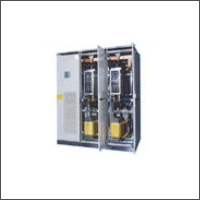
passive harmonic filters |
| A passive harmonic filter is built using an array of capacitors, inductors, and resistors. It can take the form of a simple line reactor or may use a series of parallel resonant filters to eliminate harmonics. Passive harmonic filters are also divided based on the way they are connected with the load. |
|
| |
A series filter: Here the filter is placed in series with the load and uses parallel components, i.e., inductors |
| |
and capacitors are in parallel. This filter is a current rejector. |
| |
A parallel filter: The filter is placed in parallel with the load and its components are built in series. This |
| |
filter is a current acceptor. |
|
| Based on the components used to build the passive filter, there are the following types |
|
|
| |
A Band-pass filter is a common passive filter that is built using a capacitor connected in series with a |
| |
resistor. |
| |
A High-pass filter has a resistor connected in parallel with a reactor. This helps in reducing the q value of |
| |
the filter, which will in turn help reduce the higher frequencies. |
| |
A High-pass filter when used in combination with a band-pass filter will provide a solution for medium |
| |
voltage and sub-transmission voltage networks, which have moderate harmonic distortions. |
| |
A C-type filter is used for complex loads, cyclo converters and electric arc furnaces and is a special |
| |
variation of the high pass filter. This filter will provide the load with reactive power and avoid forming parallel resonance circuits with the load. |
|
| |
| |
| |